Spiritual Dreams
Dreaming of Zombies: What the Horde Is Really Chasing
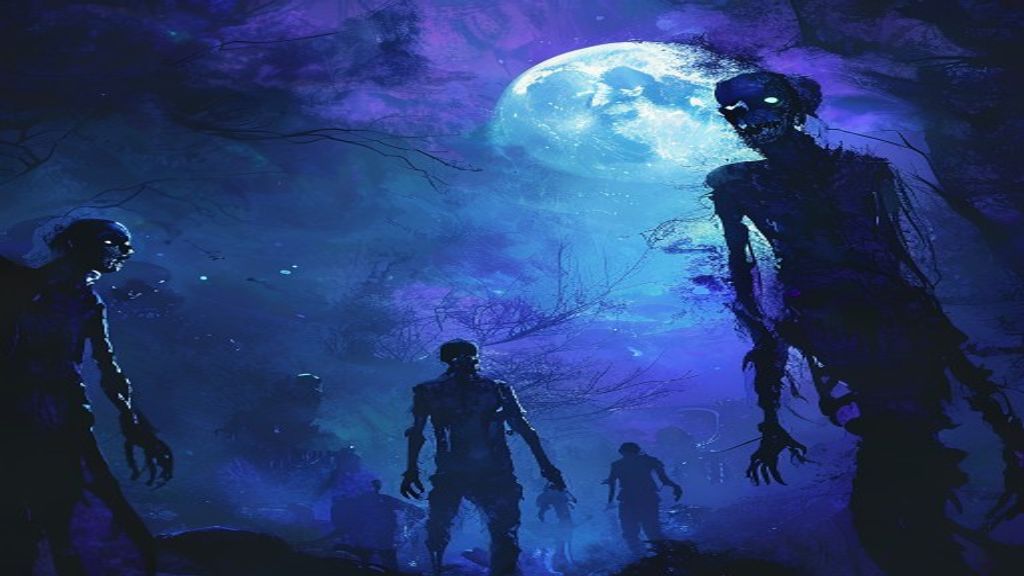
Zombies are the only monster that moves slower than you and still wins. That’s not a bug in the mythology. It’s the whole point. Every version of the zombie, from the Haitian zonbi held under a sorcerer’s will to the Hollywood horde shambling toward a barricaded mall, is built around the same nightmare engine: not speed, not strength, but inevitability. You can outrun one. You cannot outrun all of them.
I want to start there because most people who dream about zombies arrive with the wrong question. They want to know what it means that the zombie was their coworker, or that they turned into one, or that the city was already empty. Those details matter, but they matter less than the feeling of the chase itself: that particular, specific exhaustion of running from something that can’t be tired out.
Zombies in a dream almost always represent an overwhelming force in your waking life: a crowd of demands, a spreading sense of depletion, or the fear of losing yourself to something that moves through you rather than with you. Who the zombies are matters less than how many there are, and whether you were running, hiding, or turning into one.
The sound before you see them
In every zombie dream I’ve heard described in detail, the same thing happens: you know before you see. A shuffle on the stairs. A sound behind a door. The dream gives you the dread before the image. That’s not accident. That’s your sleeping mind building the architecture of overwhelm exactly as it feels in waking life: a vague presence, a building pressure, the sense that something has already started and you are already behind.
The shuffle is what I anchor to in these dreams, not the gore, not the number of zombies, but that low, dragging sound that the body knows before the brain names it. When I hear it described, I recognize something: it’s the sound of a full inbox, of a phone that keeps lighting up, of a workload that doesn’t stop when you stop. Not any single threat. The aggregate of all of them, moving toward you at exactly the speed you can’t afford to dismiss.
What the horde is made of
Ernest Hartmann’s research into how emotion becomes central imagery in dreams fits this one precisely. The zombie horde is a feeling given form: specifically, the feeling of being outnumbered by obligations, expectations, or other people’s needs. Almost every zombie dream I’ve encountered in a decade of this work has a real-world correlate in the category of too much.
When the zombies are people you know, that’s often about collective pressure from a specific group: a workplace, a family system, a social circle that’s somehow absorbing your energy without giving much back. The familiar face on a zombie isn’t usually about that person being your enemy. It’s about them being part of a system that’s depleting you. That’s a harder realization, and a more useful one.
| Tradition | How it reads the symbol |
|---|---|
| Haitian tradition | The zonbi was a person stripped of will by a bokor’s magic, forced to labor. The horror wasn’t death but the erasure of selfhood: your body walking, your soul absent. Modern zombie dreams echo this when you feel controlled by something you didn’t choose. |
| West African roots | Zombie mythology grew partly from fears about enslavement and loss of autonomy: the body kept moving, put to work, while the person inside vanished. The dream of turning into a zombie often carries this same dread of being used without consent. |
| Western horror tradition | The Romero-era horde introduced the zombie as social critique: conformity, consumerism, the crowd that converts you if you stay too long. Dreaming of a horde chasing you fits squarely here, especially when the dreamer’s waking life involves pressure to go along with something they resist. |
| Folk dream traditions (Artemidorus) | The second-century Greek interpreter didn’t have zombies, but he wrote extensively about dreams of the walking dead: figures that move without purpose tend to indicate obligations inherited from others, tasks that aren’t yours but have been handed to you anyway. |
If you were turning into one
This is the version people find hardest to talk about. Being bitten, feeling yourself change, watching your own hands go wrong: it sits differently than being chased. It’s not about being overwhelmed from outside. It’s about a creeping suspicion that the overwhelm has gotten inside, that you’ve started acting from a place of depletion and automation rather than choice. The becoming-zombie dream tends to arrive late: after the burnout has already started, not before.
G. William Domhoff would point out that this is just the continuity hypothesis at work: if you’ve been feeling hollow, going through motions, running on low for weeks, your dreams will eventually say so. The zombie that you become is a literal translation of “I don’t feel like myself right now.” Not a prophecy. An accurate report.
Hiding is not the same as surviving
One version of the zombie dream stands apart: you find a safe room, you stay quiet, you make yourself invisible. And the dream just… stays there, in that suspended dread. If you recognize this one, the question it’s asking isn’t how to escape. It’s how long you’ve been hiding from something rather than addressing it.
If the zombie dream felt less like horror and more like scale, like the whole world ending, you might find the piece on dreaming of the end of the world useful: the apocalyptic version and the zombie version share a lot of emotional DNA, especially around inevitability and the failure of ordinary defenses. And if the dream had a magical or ritual quality to it, something beyond plain dread, dreaming of magic sometimes overlaps here in surprising ways.
What you were doing in the dream matters most
Running: overwhelm is still external, still something you’re trying to outpace. Hiding: avoidance has set in, something isn’t being named. Fighting: you have some energy left, some willingness to push back. Turning: the depletion is internal now and the dream knows it before you do.
The shuffle is still in my head, the one that comes before the seeing. I think it’s the most honest part of the dream. Not the gore, not the numbers, not who the zombies are. That low dragging sound is the real message: something is coming, you already know, and you’ve been hoping not to look.
- Was I running, hiding, fighting, or turning? Each has a completely different reading.
- Could I tell who the zombies were, or were they anonymous? Named faces mean something specific.
- What does the horde feel like when I map it onto my actual life right now?
- How long have I been hearing the shuffle and choosing not to look?
Quick answers
What does dreaming of zombies mean?
It almost always reflects overwhelm: too many demands, expectations, or pressures moving toward you at once. The horde is your emotional shorthand for something you can’t simply outrun. Whether you were chased, hidden, or turning tells you which phase of that overwhelm you’re in.
What does it mean if I turned into a zombie in my dream?
That’s the burnout signal, not the overwhelm signal. Becoming a zombie in a dream tends to arrive after the depletion has already set in: you’ve been going through motions, showing up but not really present, running on fumes for long enough that your dreaming mind is naming it directly.
Why are the zombies people I know?
Because the horde is made of whatever is depleting you. When familiar faces appear, the dream is pointing at a system or group you’re embedded in: a workplace, a family, a social circle. It’s less about those specific people and more about a collective dynamic that’s costing you more than you’re getting back.
Why do zombie dreams feel so different from other chase dreams?
Because the zombie isn’t faster than you. It wins by persistence and numbers. That’s a specific flavor of dread: the thing that can’t be outrun because it never stops, never sleeps, never runs out. That difference in mechanics mirrors the emotional structure of chronic overwhelm versus acute fear.