- Tradition
- Psychological readingObject dreams
- Also read in
- The BibleSame symbol, other tradition
- Draws on
- Domhoff, Freud, Hobson
- Reviewed
- 6 min read
On the surface a medicine dream is about health, and the interesting parts seem to be the label on the bottle, what the medicine looked like and who handed it over. The dream usually turns on something else: that suspended moment of knowing you should take it and not yet doing so. The medicine is already in the hand. The decision hasn’t been made. The remedy on offer is rarely only for the body.
Medicine in a dream usually points to a solution you already have access to but haven’t used, or a form of healing you’re resisting. Whether you take it, refuse it, can’t find it, or are given too much tells you exactly where the resistance lives.
The pill sitting on the counter
There’s a particular version of this dream that involves standing in front of an ordinary glass of water with something you’re supposed to swallow and not doing it. Not because of fear exactly. More like reluctance. The sensation is the same whether the pill is heart medication or a completely invented one. The reluctance is the subject. The water glass is the frame.
What I find useful about this dream is that it’s not confused about what healing looks like. Unlike some symbols, medicine is direct. It exists for one purpose. Which means the dream has already done the interpretive work: something needs treatment. Your only job is to figure out whether you’re taking it, refusing it, searching for it, or discovering there isn’t enough of it.
Two thousand years of remedies in dreams
- ~1200 BC
The Chester Beatty papyrus sorts dreams into good and bad omens, a framework that asks whether a dream is favorable before it asks what the dream contains.
- 2nd century AD
Artemidorus writes his Oneirocritica, a handbook of dream interpretation built on one governing idea: the same dream means different things for different dreamers, depending on age, status and occupation. A dreamed medicine is read against the dreamer’s own situation: who is ill, who is treating, and what is actually wrong.
- 19th-20th century
Freud’s The Interpretation of Dreams proposes that dreams are wish fulfilment, and that what you remember, the manifest content, stands in for something else, the latent content. On that model a dreamed medicine is a surface for something underneath. His is not the most useful framing for this dream, but it introduced the idea that what a symbol shows is not always what it is about.
- Late 20th century
Domhoff’s continuity hypothesis holds that dreams extend waking concerns. Applied here, it points to the dreamer’s actual days first: a diagnosis being processed, a treatment being started or stopped, a recovery that’s not going as expected.
- Now
Medicine in dreams now reaches well beyond physical health. The symbol covers emotional treatment, psychological remedies, and the broader class of things that are supposed to help but that we resist or doubt. The pill, the bottle, the dose are still in the dream. The ailment they’re meant to treat is usually relational or emotional.
Whether you take it is almost the whole reading
You take it and feel relieved. The dream is showing you what acceptance looks like. Something in your life is asking to be treated, and part of you already knows you’ll eventually say yes. The relief in the dream is a preview of what surrender actually feels like, and it’s usually not as terrible as the resistance suggested.
You take it and feel worse, or wrong. The treatment being offered isn’t the right one. The dream isn’t telling you to refuse help; it’s pointing at a misalignment. Perhaps the solution someone is offering you doesn’t fit the actual problem.
You can’t find it, you’ve lost it, the bottle is empty. Scarcity and urgency. The help you need feels unavailable. A lost coat does the same job with a different object: in a coat dream where the protection is missing or inadequate, you are left exposed in much the same way.
You refuse it. This is the most psychologically interesting version, and the one that deserves the most time. The refusal dream is the reluctance carried to its end: you know the medicine exists, you know it’s for you, and something in you won’t take it. That’s not about stubbornness. It’s usually about identity. Taking medicine means admitting you’re not well. Some people can’t do that even in a dream.
The skeptic’s view, and why it’s incomplete
Hobson and McCarley’s activation-synthesis theory would point out that medicine is a common object, that we all interact with it, and that the sleeping brain will inevitably generate these images without any special meaning attached. If you took medication before bed, or you’re in a period of health stress, the image is explained by that and nothing more.
He’s probably right about the origin of the image. But Domhoff’s continuity work quietly absorbs this objection: even if the image is triggered by something literal, what your dreaming mind does with it, whether you take the medicine, whether you fear it, whether you can’t find it, that isn’t random. Those variations track real psychological attitudes. The brain’s improvisation tells you something even when it’s improvising.
I think of this dream as being a little like a photograph of a moment you haven’t fully processed yet. The medicine is in focus. Everything else in the frame is blurred. That sharpness is deliberate. Your sleeping mind has decided this is the thing worth looking at right now.
When the medicine is for someone else
A dream where you’re administering medicine to someone else is different in almost every way. You’re in the role of the healer, the caregiver, the one who knows what’s needed. This can be genuinely affirming: a sign of competence or readiness to help. It can also be exhausting, especially if the other person won’t take it, or if you’re not sure you have the right dose, or if more people keep appearing and needing the same thing.
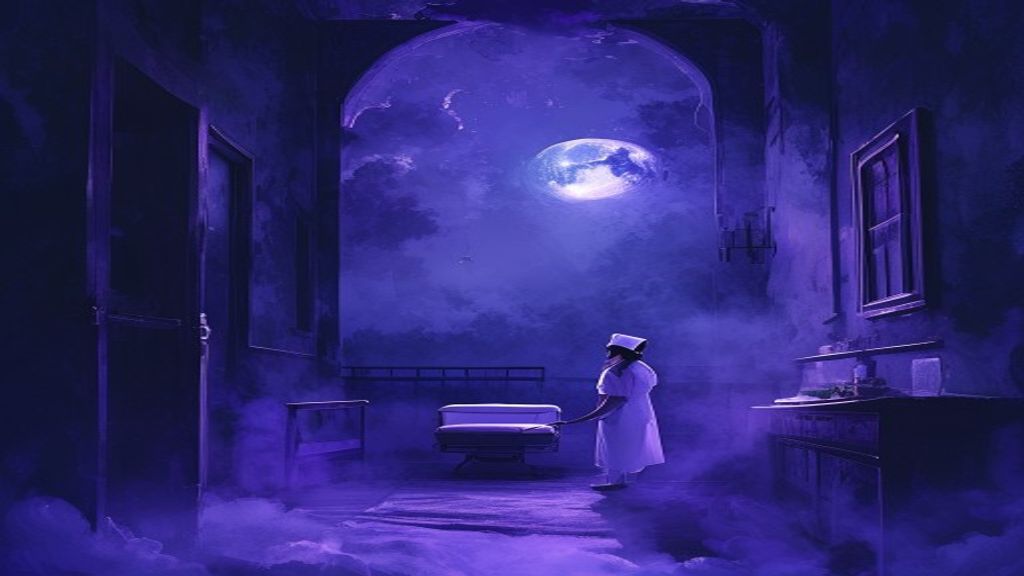
That last version, the exhausted healer surrounded by people who need medicine, is one of the more honest dreams a caregiver can have. It doesn’t need much interpretation. Your dream state is simply saying out loud what you can’t always say in the day: this is a lot. If the figure in the white coat was someone else, dreaming of a doctor reads that figure as the part of you that knows something is wrong and wants it named.
Back to the glass of water and the pill on the counter: the delay is not weakness or avoidance. Sometimes it’s just the moment before you do something that changes the shape of things a little. The reluctance isn’t pathological. It’s human. You’ll pick it up.
- Did I take the medicine, refuse it, or was I unable to reach it?
- Was I the patient or the one doing the treating?
- Is there something in my life I know I should address that I’ve been stalling on?
- If the medicine made me feel worse, what in my waking life is being offered as a solution that might not actually fit?
One symbol, two traditions
Psychology keeps medicine inside your own story, a symbol your mind built from your days. The biblical tradition looks outward instead, and asks whether Scripture gives the image any voice at all.
Medicine in a dream usually points to a solution you already have access to but haven’t used, or a form of healing you’re resisting. Whether you take it, refuse it, can’t find it, or are given too much tells you exactly where the…
You are reading this oneScripture says nothing about medicine dreams directly. It says a great deal about healing as a divine activity, about the ‘balm in Gilead,’ about the physician analogy, and about the relationship between receiving healing and…
Read the biblical meaning →Quick answers
What does dreaming of medicine mean?
It almost always points to healing you’re resisting, seeking, or unsure about. The key isn’t the medicine itself but what you do with it: taking it, refusing it, losing it, or being overwhelmed by it. Each version maps to a different relationship with help, treatment, and recovery in your waking life.
What does it mean if I refuse medicine in a dream?
Refusal usually points to an identity conflict. Taking medicine means accepting that something is wrong, and some people resist that acknowledgment even while sleeping. It can also signal that the solution being offered in waking life doesn’t feel right for the actual problem.
What does it mean to give medicine to someone else in a dream?
You’re in a caregiver role, whether you chose it or had it placed on you. If it feels natural, the dream may reflect real emotional competence. If you’re overwhelmed, surrounded by people who need you, or unsure of the right dose, the dream is probably processing the weight of that role honestly.
Why do I dream about medicine when I’m not sick?
Because the symbol has expanded. Medicine in dreams rarely refers only to physical illness. It stands for any solution, treatment, or change that’s supposed to help but that requires you to admit something needs fixing. Emotional medicine, relational medicine, the remedy you know about and haven’t reached for yet.
Sources for this reading
- Domhoff, G. W. (2003). The Scientific Study of Dreams: Neural Networks, Cognitive Development, and Content Analysis. American Psychological Association.
- Domhoff, G. W. (1996). Finding Meaning in Dreams: A Quantitative Approach. Plenum Press.
- Freud, S. (1900). The Interpretation of Dreams (Die Traumdeutung; first published November 1899). English translation by James Strachey, Basic Books.
- Hobson, J. A., & McCarley, R. W. (1977). The brain as a dream state generator: An activation-synthesis hypothesis of the dream process. American Journal of Psychiatry, 134(12), 1335-1348.DOI
- Artemidorus of Daldis (2nd century CE). Oneirocritica. English edition: Harris-McCoy, D. E. (2012). Artemidorus’ Oneirocritica: Text, Translation, and Commentary. Oxford University Press.
Full bibliography on Sources and method. Found a mistake? Tell us and see the corrections log.