Action Dreams
Dreaming of Being Naked in Public: Exposure and What It's Asking
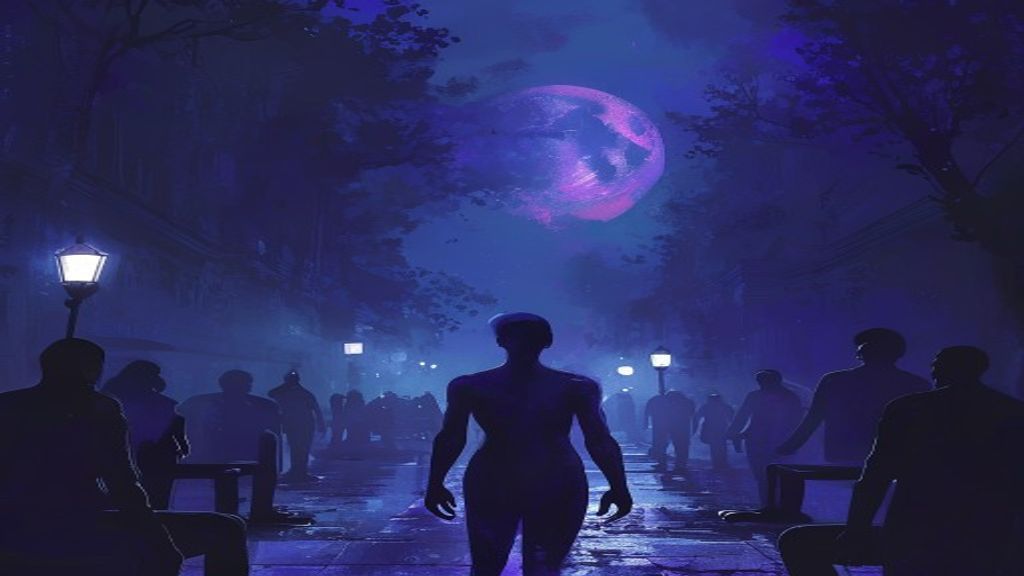
I still remember the particular quality of the light in that school gymnasium. Fluorescent, greenish, the kind that flattened everything and left nowhere to hide. I was maybe twelve, standing in front of everyone for something I’d agreed to before I understood what agreeing actually meant. I wasn’t undressed. I might as well have been. That feeling, the skin-prickling certainty that everyone can see exactly what you haven’t prepared, is what the naked-in-public dream is made of. And most people I’ve spoken to about it know immediately which waking moment taught it to them.
Dreaming of being naked in public almost never signals a concern about your body. It tends to signal that something about you is being seen, or risks being seen, before you feel ready. The dream is about exposure in the broader sense: vulnerability, inadequacy, or a part of yourself you haven’t chosen to reveal.
The gymnasium light, again
What makes this dream so common, and what makes it hit so reliably, is that exposure fear isn’t unusual. It’s nearly universal. Almost everyone has something they’re managing carefully, a skill gap, an opinion, a feeling, a history, and almost everyone has known the sharp particular fear of that thing being visible before they’ve decided to show it.
The dream literalizes that fear in the most economical way possible: no clothes. It skips the metaphor. You’re standing somewhere public, which in the dream’s logic means a place where being seen has stakes, and you’re more visible than you wanted to be. In most versions, the crowded room barely notices. Or it notices and you can’t tell how it feels about what it sees. That ambiguity is part of the design.
Tor Nielsen’s work on typical dreams finds this one among the most cross-culturally consistent, which is interesting because what counts as public and what counts as exposed varies enormously across cultures. The common thread isn’t bodies. It’s the structure: unintended visibility in a place where visibility carries judgment.
Nobody’s looking at you the way you think
The crowd’s reaction in these dreams is almost always wrong. People are indifferent, or they react strangely, or the dream keeps threatening a reaction that never quite arrives. That indifference isn’t the dream being optimistic. It’s the dream being honest about the gap between how exposed you feel and how exposed you actually are.
Revonsuo’s threat-simulation model would say your brain is rehearsing an exposure scenario, practicing the feeling so you can survive the real thing. Maybe. But I think the indifferent crowd is doing something more specific: it’s showing you that the catastrophe you’re expecting hasn’t arrived and might not. Your vulnerability is louder inside your own head than it is on the outside.
What kind of exposure this is
Domhoff would note, correctly, that these dreams mirror what’s live in a person’s waking life. People report them more during job changes, new relationships, public performances, periods of academic or professional evaluation. The dream is reliable like that. It shows up when the question of how you appear to others is actually live.
The clothes you can’t find
There’s a companion version: not naked exactly, but frantically searching for clothes you can’t find, or discovering mid-commute that you’ve forgotten something crucial. This one feels more like the being-chased dream than the naked dream, because it’s kinetic, you’re moving, trying, failing. But the emotional core is the same: your covering is inadequate to the situation you’re in.
I think of the naked dream as a dream in a stopped frame, and the searching dream as the same content in motion. Which version you get might tell you something about whether you’re still in the middle of the exposure event or whether you’ve already arrived somewhere and are just now feeling how bare you are.
What I find most interesting about this dream isn’t the exposure part. It’s that it almost always comes with an audience, a specific place, some version of performance or presentation. The dream knows that it matters who’s watching. The gymnasium light returns because there’s always a gymnasium: a place where you stood in front of people who hadn’t chosen you and tried to be enough. If you also find yourself dreaming of flying very high, the two often trade off during the same season, one the fear of being seen, the other the fantasy of being above the need to be.
The dream about nakedness rarely wants you to cover up faster. It wants you to look at what you’ve been hiding and ask whether the hiding is costing more than the revealing would.
- What specifically were you exposed to, and is there a waking situation where that exposure feels live right now?
- How did the crowd react? Their indifference or attention is part of the message.
- Is there something you’re managing carefully, presenting differently than it is, that might be exhausting you?
- Was there any part of the dream where the nakedness felt freeing rather than awful?
Quick answers
What does it mean to dream about being naked in public?
It’s almost never about the body itself. The dream tends to represent exposure in a broader sense: vulnerability, a skill gap, an opinion or history you haven’t chosen to reveal, or a version of yourself that might be visible before you feel ready. The place you’re naked in tells you which domain of life the exposure belongs to.
Why does nobody seem to care in my naked dream?
That indifference is actually significant. Revonsuo’s threat-simulation framework would say your brain is rehearsing an exposure scenario, but the crowd’s lack of reaction often reflects reality more accurately than the fear does. Whatever you’re protecting may matter far less to people around you than it does inside your own head.
Is dreaming of being naked a sign of anxiety?
It can be, particularly during transitions: new jobs, new relationships, public performances, any period where how others see you carries real stakes. Domhoff’s research consistently shows these dreams cluster around exactly those moments. But the anxiety the dream points at is usually more specific than general stress, it tends to be about a particular kind of visibility you’re not ready for.
What does it mean if I felt okay about being naked in the dream?
That’s the less-common version and worth paying attention to. Feeling fine or even free while naked in a dream can point to a dropping of pretense, something you’ve been performing that part of you is ready to put down. It sometimes appears during transitions where an old role or persona is becoming genuinely optional.