- Tradition
- Psychological readingObject dreams
- Draws on
- Domhoff, Hobson
- Reviewed
- 6 min read
“You were the only one who ran toward it,” someone says, and in the dream that line lands as completely ordinary. Of course you did. The fire was there and you had the gear and the people were still inside. The logic of the dream makes it automatic. And then you wake up in a Tuesday morning bedroom and wonder what you were so sure about while you slept.
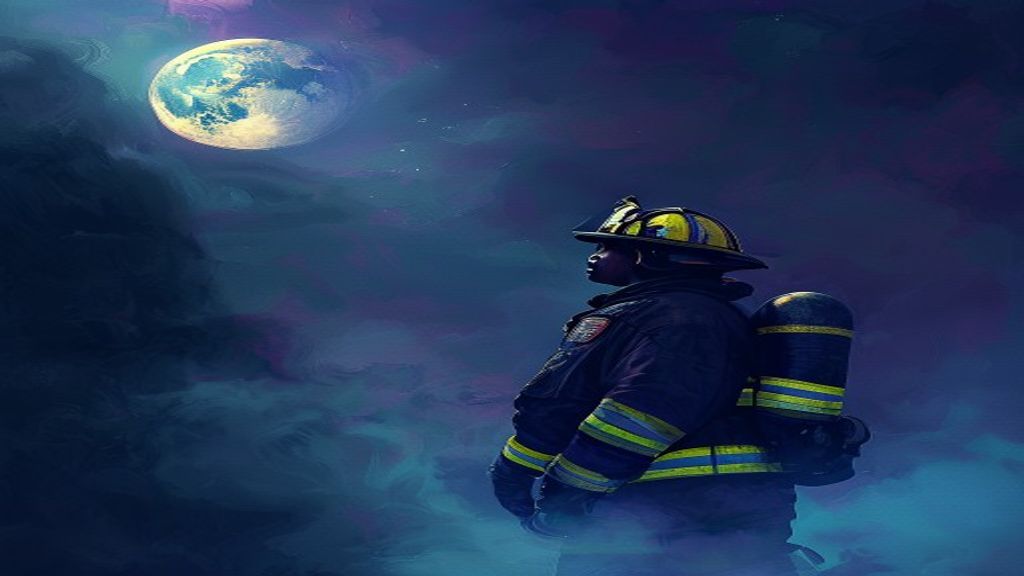
Dreaming of being a firefighter usually means part of you is ready to move toward a problem rather than away from it. The fire tells you what the problem is. Your confidence or fear in the dream tells you how ready you actually feel. This isn’t a violent or frightening dream in the way it might sound; it’s almost always about agency.
Running toward it
There’s something specific about firefighter dreams that separates them from other rescue profession dreams. In doctor dreams, you’re usually stationary, the emergency comes to you. In dreaming of being a doctor, the setting is controlled and the knowledge matters. But firefighter dreams are kinetic from the first second. You’re already moving. The gear is already on. The action starts before the context does.
Someone who dreams of being a firefighter usually doesn’t think of themselves as particularly heroic in waking life. That’s exactly why the dream is interesting. It isn’t confirming a self-image they already have. It’s suggesting one they don’t. You’re not someone who runs toward the fire, except that in your sleep, you are, without hesitation, without discussion.
The fire itself is doing most of the interpretive work here. Fires in dreams are almost never random. They’re consuming something specific: a building you recognize, a room from your childhood, a structure that clearly belongs to someone you know. Whatever the fire is eating, that’s the situation your mind tagged as urgent.
The fire has an address
People often downplay the location in these dreams, the way you’d skip past a street address in a newspaper story. But the address is the article. A fire in your childhood home is not the same dream as a fire in your workplace. A fire in a stranger’s building is not the same as a fire in your own. The building is almost always recognizable, even if it’s been rearranged in the way dreams rearrange everything.
If the burning building is a relationship, the dream is asking you to stop standing across the street. If it’s a career structure, the dream may be saying both that the structure is on fire and that you’re capable of being the person who goes in. That’s an uncomfortable combination. It might mean the thing you’re being asked to save is worth saving. Or it might mean you’re the person who runs into buildings that should be left to burn. The dream doesn’t settle that for you.
The suit and the gear
The protective equipment shows up in enough versions of this dream that it’s worth noting separately. People describe the heaviness of the gear, the way it slows them down even as it makes the thing possible. That weight is doing something: it’s the dream’s version of preparation, the cost of being the one who goes in. You’re not invincible. You’re just equipped enough.
When the gear is missing or wrong in the dream, and you go in anyway, that’s a different signal. Sometimes it’s courage; sometimes it’s the dream version of a habit you have of taking on things without enough protection. I won’t tell you which one it is for you. But if you notice you keep dreaming of going into fires inadequately suited, it might be worth asking which risks in your waking life you’ve been accepting without the full equipment.
G. William Domhoff’s work on continuity between waking life and dreams suggests these details aren’t decorative. The missing helmet is probably missing for a reason your mind has already noticed. Hobson, I suspect, would find all of this overcooked. He’d prefer to tell you the brain generated the firefighter image from activation patterns and left you to construct a story around it. I’m not going to argue with him directly, but I do think the story your brain chose to build is worth examining.
The dream as a singer of a different kind
I read firefighter dreams as the mind’s way of rehearsing directness. Not speed, not fearlessness, but directness. The willingness to move toward a problem without first managing everyone’s reactions to you moving toward it. People who dream of dreaming of being a singer are often rehearsing visibility. Firefighter dreams are rehearsing intervention. They’re not about being seen. They’re about being useful.
It’s also worth saying that this dream can visit people who are quite passive in their daily lives. Conflict-avoidant. Slow to name problems. The dream doesn’t mock them for that. It just quietly shows them what it would feel like to be otherwise.
What I haven’t resolved, and maybe can’t, is whether these dreams are prescriptive or just descriptive. Are they showing you who you could be, or who you already are when the social furniture of waking life gets moved out of the way? I lean toward the second reading. The dream didn’t invent your courage. It just turned off the noise that usually covers it up. If the dreaming of being an artist dream is about what you might make, the firefighter dream is about what you might already be able to do.
- What was burning, and whose building was it?
- Did I have the right gear, or did I go in anyway?
- Was there someone specific I was trying to get to?
- What situation in my waking life has been on fire while I’ve been watching from across the street?
Quick answers
What does dreaming of being a firefighter mean?
It usually signals a readiness to confront something urgent rather than avoid it. The fire and the building tell you what the problem is. Your confidence or hesitation in the dream tells you how prepared you actually feel.
Is dreaming of being a firefighter a good sign?
Generally, yes. It’s one of the more action-oriented profession dreams, and it tends to appear when you have the capacity to address something you’ve been circling around. The fact that you’re in the gear rather than watching from outside matters.
What does it mean if I can’t put the fire out in the dream?
It suggests the situation feels larger than your current approach can handle, not that it’s unsolvable. Missing gear or a spreading fire often points to a need for more resources, more help, or a different strategy rather than more personal effort.
Why do I keep dreaming of being a firefighter?
Recurring versions often map to a recurring situation in waking life that keeps requiring intervention. Something keeps catching fire and you keep being the one who responds. It’s worth asking whether you’re the right person for that job, or whether the thing needs to be addressed at the source.
Sources for this reading
- Domhoff, G. W. (2003). The Scientific Study of Dreams: Neural Networks, Cognitive Development, and Content Analysis. American Psychological Association.
- Domhoff, G. W. (1996). Finding Meaning in Dreams: A Quantitative Approach. Plenum Press.
- Hobson, J. A., & McCarley, R. W. (1977). The brain as a dream state generator: An activation-synthesis hypothesis of the dream process. American Journal of Psychiatry, 134(12), 1335-1348.DOI
Full bibliography on Sources and method. Found a mistake? Tell us and see the corrections log.