Nature Dreams
Dreaming of a Tsunami: When the Water Won't Wait
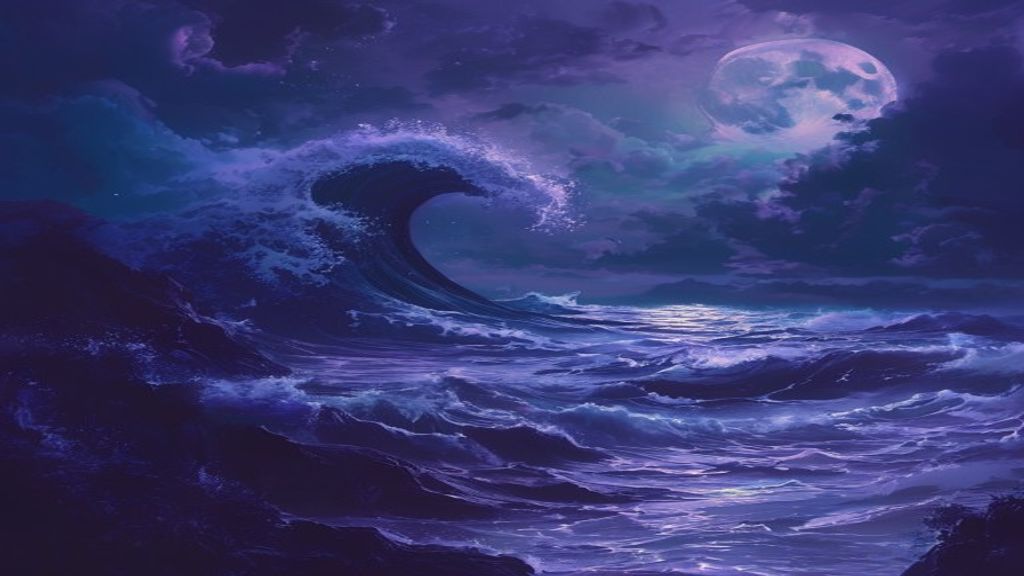
A memory comes back to me on and off: watching a weather radar on a laptop while a storm tracked toward the coast. Not a dramatic moment. I was sitting at a kitchen table, coffee going cold, and the colored blob on the screen kept moving in the direction of somewhere people lived. Nobody was running. The knowing had already happened; the arriving hadn’t yet. That particular gap between knowing and arriving is almost exactly what a tsunami dream feels like, and it’s the detail I keep coming back to when people describe these dreams to me.
A tsunami in a dream almost always signals emotion that has been building longer than you’ve admitted. The wave doesn’t represent the feeling itself; it represents the scale of what happens when a feeling you’ve been holding back finally reaches shore. The dream tends to arrive before a breakdown, not after.
The water you saw coming
Most people who dream of a tsunami don’t get swallowed by it. They stand on a beach, or a rooftop, or a hotel balcony, and they watch it come. That’s the detail that separates this dream from a drowning dream or a flood dream. It’s not chaos; it’s anticipation. The wave is enormous and slow and absolutely certain, and for a few dream-seconds you’re just watching it approach. Whatever the dream is pointing at, it’s something you already sense is on its way.
Jung wrote about water as the unconscious itself, the part of the psyche that moves on its own schedule regardless of what the surface-self has decided. A tsunami, in that reading, isn’t an outside catastrophe at all. It’s inner material that has built to the point where the ordinary container, the daily routine, the careful management, can no longer hold it. I find that reading persuasive, even if I usually distrust any symbol reduced to one clean meaning.
What the wave is (and what it isn’t)
You see the wave but aren’t taken by it. This tends to mean awareness is already there: you know something is coming. The dream is asking whether you’ve actually prepared, or just noticed.
The classic anxiety version. Usually tied to a deadline, a decision, or a conversation that keeps getting postponed. The wave isn’t punishment; it’s the consequence of the postponement.
Getting caught by the wave and coming through it is one of the more hopeful versions. It can mean you’re closer to processing something than you think. Surviving is the dream’s way of telling you you’re more resilient than the fear suggests.
Grief and helplessness together. If a specific person is swept away, the dream may be about that relationship: a distance that’s grown, a fear of losing someone, a thing unsaid.
The wave hangs there on the horizon and the dream just… holds. Frozen anticipation. Often appears during prolonged periods of uncertainty when the outcome isn’t known yet.
Domhoff would point out, fairly, that most recurring threat imagery in dreams tracks real waking stress almost one-to-one. He’d be skeptical of any reading that went too far from the dreamer’s actual circumstances, and honestly that skepticism is useful here. Before you reach for an archetypal interpretation, check the obvious: what have you been putting off? What piece of news are you waiting for? The wave doesn’t need to mean something ancient. It might just mean Tuesday.
The oldest tsunamis in the record
Artemidorus, writing in the second century, catalogued water dreams at length and read rising, violent water as either upheaval in public life or the approach of an overpowering force in private affairs. He’d have recognized the tsunami dream immediately, even if the word didn’t exist for him. Across traditions the ocean in dreams has been understood as the thing that is larger than you, and that remains true whether you take it literally or psychologically.
In some Pacific cultures, dreaming of a great wave was considered a message from ancestors or the sea itself, a warning meant to be heeded and shared. The detail that interests me isn’t the supernatural claim but the communal response: the dream was supposed to be spoken aloud, brought into the group. That instinct, that the overwhelming feeling needs to be named with other people present, might be the most practically useful thing in the whole tradition. Keeping a tsunami dream private seems to miss the point of it.
What it usually isn’t
It isn’t prophecy. I know that needs to be said directly because these dreams can feel uncannily literal, and the feeling of dread that follows you into the morning is real. But dreaming of a wave the night before a real weather event is coincidence amplified by memory; we forget the thousand tsunami dreams that preceded ordinary days. The dream is about you, not the calendar.
The gap between knowing and arriving
That’s where I keep landing, with these dreams and with the kitchen-table memory. The storm on the radar was already going to do what it was going to do. The knowing didn’t change anything about its path; it changed what I did with the hours before. Tsunami dreams work the same way. They arrive in the gap between sensing something and actually letting it land. If you’ve been managing an emotion at arm’s length, keeping it out past the breakers, the dream is the moment the water finally gets to the shore.
If you want to read more about water as a dream symbol more broadly, the piece on dreaming of a calm sea is almost the opposite experience, and the contrast is illuminating. And for the way natural scale tends to work in dreams, dreaming of a meteorite shares some of the same grammar: something vast, coming from outside your control, arriving whether or not you’re ready.
The radar image comes back to me when I remember a stretch of months a few years ago when I kept having this dream, wave after wave, always watching from slightly too far away to do anything useful. I wasn’t in a coastal city. I was in the middle of a situation I’d been quietly refusing to acknowledge as serious. The dreams stopped about two weeks after I finally said, to another person, out loud, that I was in over my head. I haven’t had one since. I’m not entirely sure what to make of that.
- Where was I standing, and could I see the wave coming? That position says something about how much awareness I already have.
- What in my waking life has been building pressure that I’ve been managing instead of addressing?
- Is there someone I should be saying something out loud to, rather than carrying it alone?
- Did I survive the wave? And if so, what does surviving feel like, from here?
One symbol, two traditions
Read side by side, the two traditions pull in different directions: tsunami as a signal from your own mind, or tsunami as an image to test against the text. Knowing which question you are asking is half the interpretation.
A wave that's already too big by the time you see it. What tsunami dreams reveal about pressure, emotional overwhelm, and the feelings we keep putting off.
You are reading this oneWhat Scripture actually says about overwhelming waves and the roaring sea in dreams. KJV passages, honest gaps, and biblical principles for discernment when the ocean rises in sleep.
Read the full biblical meaning →Quick answers
What does dreaming of a tsunami mean?
It almost always points to emotional pressure that has been accumulating. The wave represents the scale of a feeling that has outgrown the container you’ve been keeping it in. The dream tends to arrive while you’re still anticipating the overwhelm, not after it.
Is a tsunami dream a bad omen?
No. It’s an internal signal, not a forecast. Dreams like this are more useful read as pressure gauges than warnings about the outside world. The dread that follows is real, but it belongs to something inside you, not something on the horizon.
Why do I watch the tsunami but never get hit?
Watching from a distance is actually the most common version, and it usually means you already sense what’s coming. The wave is real enough to your dreaming mind; it just hasn’t made contact because you haven’t fully let the feeling land yet.
What does it mean if the tsunami sweeps someone else away?
That version tends to be about a relationship: fear of losing someone, grief for a distance that’s grown, or a helplessness around someone you love. The person taken by the wave is worth thinking about carefully.