- Tradition
- Psychological readingSpiritual dreams
- Also read in
- The BibleSame symbol, other tradition
- Draws on
- Domhoff, Hartmann, Artemidorus
- Reviewed
- 5 min read
What do you actually feel when you see them? Not philosophically. In the dream, in the first half-second before you remember they’re gone. That feeling is the whole article, and it sorts these dreams far better than any symbol dictionary can.
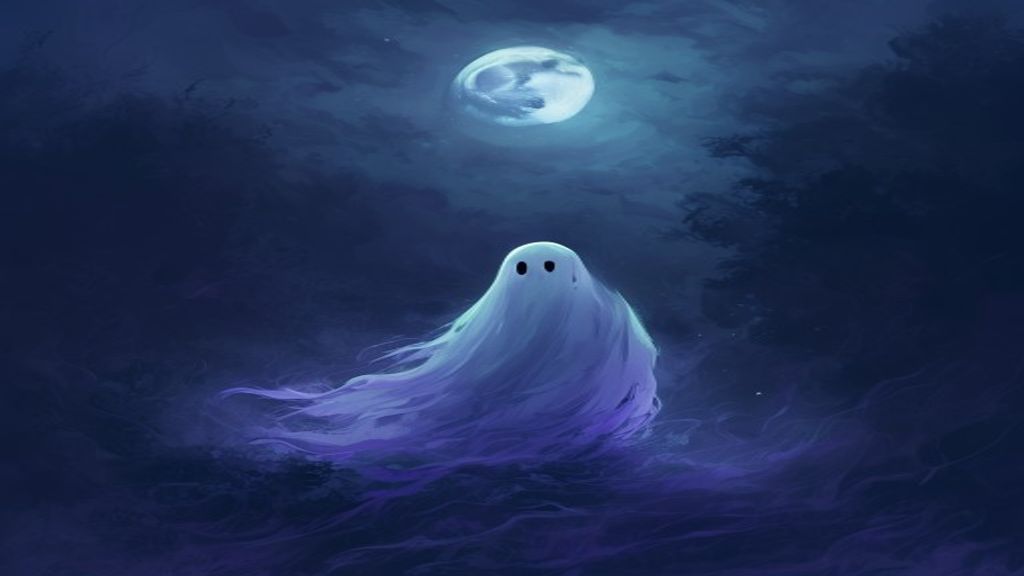
Dreaming of a familiar ghost is almost always a grief dream in different clothes. Your mind casts someone you’ve lost into the dream not to haunt you but to keep processing the loss, or to finish something that still feels unfinished. The presence isn’t a sign, a message, or a warning. It’s your memory wearing that person’s face.
Intimate before it is eerie
In the dream the person is simply there, standing in a kitchen or at a window, and you feel the lurch of “you’re alive” and wake up holding that moment for as long as you can before it dissolves. Not scary. Almost the opposite. Almost the worst thing. That’s the anchor most people don’t expect from a familiar ghost dream: it’s intimate before it’s eerie. The ghost isn’t faceless, isn’t threatening. It’s someone whose voice you still know. And that’s exactly what makes the dream so hard to shake. It’s grief doing something useful. It’s also grief reminding you, very loudly, that it isn’t done.
Two ways to read a ghost you recognize
Still missing them
The familiar ghost arrives and the dream’s mood is warm, even if bittersweet. You talk. You’re relieved. You wake up wishing you could go back in. This version tends to cluster around anniversaries, around objects that belonged to them, around times of transition when you’d have wanted their opinion. It’s a continuation dream: the relationship your mind won’t quite close.
Something unresolved
The familiar ghost arrives and something’s wrong in the dream. They’re distant, or disappointed, or you’re trying to tell them something they won’t hear. This version tends to surface old arguments, or things you never said, or a death that came too fast for a goodbye. It’s not punishment. It’s your mind handing you a thread it hasn’t been able to cut.
Most people assume the warm version is healthier. I’m not sure that’s right. The unresolved version knows something the warm one doesn’t: that there’s a real knot still there. It’s harder to wake up from, but it’s pointing somewhere you can actually go. You can write the letter. You can say the thing to an empty room. That’s not superstition. That’s what closure actually looks like, when you’re honest about it. Both versions are worth sitting with. The question is which feeling was underneath, and whether you can trace it to something specific in your waking life. If you’ve been dreaming of your own soul or sense of self around the same time, the grief may be tangled up with questions about your own identity after the loss.
Why this specific person
Dreams don’t select randomly. If your mind chose your grandmother and not your neighbor, your college friend and not a famous stranger, that choice means something. Domhoff’s continuity hypothesis is blunt about this and it’s usually right: the people in your dreams are the people who matter in your waking life, or who mattered and still haven’t been metabolized. Your familiar ghost is familiar because that relationship isn’t finished. Maybe it can’t be, in the ordinary sense. But the dream keeps working on it anyway. Artemidorus, writing in the second century CE, insisted that the same dream means different things for different dreamers. That instinct still holds up here: the relationship, the mood, and what the ghost said or didn’t say all change the reading. I find those details useful without any literal framework, not because the dead actually send messages, but because your sleeping mind encodes the emotional truth in exactly those details. What did they say? What did you want to say back?
The ghost as borrowed shape
Hartmann’s work on dreams and emotion (Dreams and Nightmares, 1998) rests on the idea that a dominant feeling in your emotional life will find a central image that holds it. A familiar ghost is one of the most efficient containers emotion has ever found. Love, grief, guilt, unfinished business, the specific longing for one particular voice: all of it fits inside the image of someone standing in a doorway who shouldn’t be there. This is why the ghost dream so often shifts when your grief shifts. Grief dreams often change as the grief does: at first the person is unreachable, then they are just present, then one day the ghost smiles or waves and something in the dreamer settles. That arc is grief doing its actual work. The ghost doesn’t disappear because you’ve forgotten the person. It disappears because you’ve found a way to carry them differently. If the ghost shows up wearing the face of someone from a past you rarely visit, it sometimes signals less about that specific person and more about the version of yourself you associate with them. That feeling of being followed by something you haven’t fully released is also what sits under dreams of a curse, where the weight that won’t lift has no face at all.
When the dream repeats
Short answer: you haven’t finished yet. That’s not a failure. Grief doesn’t run on a schedule, and dreams are patient. But if the same scene keeps replaying with the same locked-in quality, the same unspoken thing, it might be worth asking whether you’ve actually let yourself feel the loss during waking hours, or whether you’ve been competent and busy instead.
Years after a loss, the dream can still return with the person doing something ordinary, making tea or looking out a window, and you wake with that particular mix of glad and sad that doesn’t have a cleaner name than that. Not every one of those dreams needs careful interpretation. Some of them are just the person, or as close as your sleeping mind gets. You don’t have to do anything with that. If the figure is simply a person who has died and is not dressed as a ghost at all, dreaming of a dead person reads the same visit as a sign of the ongoing relationship, and dreaming of someone dead as alive deals with the version where the dream insists they never left. With a dream this personal, though, the best interpreter is probably you.
- What did I feel in the first second before I remembered they were gone?
- Was there something unspoken between us, something the dream kept returning to?
- Did the ghost feel like a visit or like a reminder of something I haven’t finished?
- Has my relationship with this grief shifted lately, and did the dream reflect that?
One symbol, two traditions
Where the psychological read treats familiar ghost as a mirror of your inner state, the biblical tradition treats it as something to weigh, prayerfully, against what Scripture actually says.
Dreaming of a familiar ghost is almost always a grief dream in different clothes. Your mind casts someone you’ve lost into the dream not to haunt you but to keep processing the loss, or to finish something that still feels…
You are reading this oneThe Bible is sharply negative about deliberately seeking contact with the dead, but it says almost nothing about the dead appearing unbidden in dreams. Those are different things. Scripture’s warnings are about sorcery and…
Read the biblical meaning →Quick answers
What does it mean to dream of a familiar ghost?
It almost always means your mind is still processing the loss of that person, or holding something unresolved from that relationship. The ghost is your own grief taking the most recognizable shape it knows. Whether the dream feels warm or unsettling says more about what’s unfinished than about anything supernatural.
Is dreaming of a dead person a sign they’re trying to contact you?
Most dream researchers would say no, and I’d agree. What you’re experiencing is your own memory, emotion, and unfinished business given a face and a presence. That’s not less meaningful. It’s actually more personal than a message from outside would be.
Why do I dream of someone I lost more now than right after they died?
Grief doesn’t always arrive on schedule. Sometimes the first weeks are numb and practical, and the dreams come later when the adrenaline of the loss has worn off. Or something in your current life has reopened the loss, an anniversary, a transition, a moment you’d have shared with them.
How do I stop having the same dream about someone who died?
Recurring ghost dreams usually ease when you’ve actually acknowledged what’s unfinished. That might mean writing something you never said, talking to someone about the loss, or simply letting yourself feel it during waking hours rather than staying busy. The dream tends to retire once you’ve done the thing it was pointing at.
Sources for this reading
- Domhoff, G. W. (2003). The Scientific Study of Dreams: Neural Networks, Cognitive Development, and Content Analysis. American Psychological Association.
- Domhoff, G. W. (1996). Finding Meaning in Dreams: A Quantitative Approach. Plenum Press.
- Hartmann, E. (1998). Dreams and Nightmares: The New Theory on the Origin and Meaning of Dreams. Plenum Trade.
- Artemidorus of Daldis (2nd century CE). Oneirocritica. English edition: Harris-McCoy, D. E. (2012). Artemidorus’ Oneirocritica: Text, Translation, and Commentary. Oxford University Press.
Full bibliography on Sources and method. Found a mistake? Tell us and see the corrections log.