- Tradition
- Psychological readingPeople dreams
- Draws on
- Domhoff, Jung, Cartwright
- Reviewed
- 4 min read
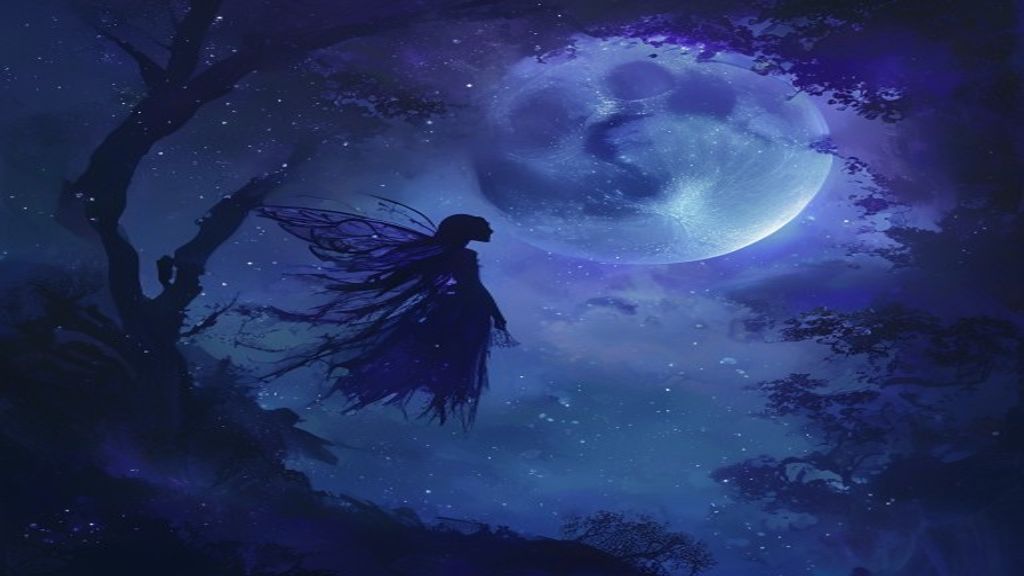
Hartmann argued in Dreams and Nightmares (1998) that a dream takes an emotion and builds a central image around it. A fairy is an unusually clean example. It is small enough to be harmless, luminous enough to feel significant, and defined almost entirely by what it can give. The emotion underneath is rarely wonder for its own sake. More often it is the wish for relief that you haven’t had to earn, held out to you in the shape of a glowing hand.
Fairy dreams tend to land softly. Most people describe them as vivid, a little wistful, with a quality that resists full waking translation. The figure rarely speaks. It glows or moves or simply waits. And the dreamer reaches, or hesitates, or wakes before they get there.
What the fairy is made of
The figure exists at an interesting intersection: small enough to be harmless, luminous enough to carry significance, and defined almost entirely by what it can give. Fairies in the collective imagination are beings of intervention. They arrive when the ordinary rules aren’t working. They offer something you didn’t earn and couldn’t have found yourself.
So when this figure shows up in a dream, the first thing to ask isn’t what the fairy looks like but what it’s offering, and what in your life right now you’re hoping to receive without having to fully earn. That’s not a criticism. It’s just the question the dream is sitting with.
A fairy is a wish wearing wings. That sounds reductive, but follow it: wishes aren’t trivial, they’re compressed longings, often ones you’ve stopped letting yourself state plainly. The dream isn’t mocking you for wanting. It’s making the want visible.
A short note on strangeness
Not all fairy dreams are gentle. Some people describe them as unsettling, a coldness underneath the light, a sense that the offer comes with a cost they can’t read. That version tends to arrive in people who are wary of receiving help, or who’ve learned that gifts usually come with strings. Your dream is made of your history.
| Tradition | How it reads the symbol |
|---|---|
| Celtic tradition | Fairies were neither good nor bad but capricious, associated with in-between places: dusk, the edge of forests, the threshold between worlds. To dream of one was a visitation from beyond the ordinary, potentially dangerous. |
| English folklore | The fairy godmother tradition, which crystallized in literary form in the 17th and 18th centuries, coded the fairy as pure benefactor, a corrective force for undeserved hardship. |
| Japanese tradition | Kodama and yōsei figures occupy similar symbolic space: nature spirits that appear when humans are near a boundary, requiring respectful attention rather than request. |
| Jungian reading | Jung saw small, luminous figures as emissaries of the unconscious, often carrying messages the ego has suppressed or refused to acknowledge. The smallness matters; it suggests something trying to get in through a narrow gap. |
If you dreamed of a witch recently, you’re working with a related but inverted figure: both operate outside the ordinary social contract, both traffic in transformation, but one offers freely and one exacts a price. The distinction your dream drew between them is worth examining.
When the fairy offers something specific
This is the version that sticks. You’re offered an object, a piece of information, a gesture that holds obvious weight in the dream even if it’s something mundane, a door key, a letter, a small stone. Hartmann’s work on emotion and dream imagery would frame this as your mind building a concrete form around an abstract need. The object is the emotion, concentrated and handed to you.
What matters is whether you took it or didn’t. And if you hesitated, if you woke up before you could decide, that hesitation is the dream’s actual subject. Not the fairy. Not the gift. The pause.
Cartwright’s research on how dreams process emotional experience, especially in moments of difficulty or transition, fits exactly here. Fairy dreams tend to cluster in periods of exhaustion or extended hardship, when someone has been working hard at something with no visible reward. They’re not predictions. They’re your mind rehearsing the feeling of relief.
Domhoff, who is careful and skeptical and would describe this whole symbolic architecture as wish fulfillment with extra steps, isn’t wrong. But even as a wish fulfillment, the dream is informative. It tells you what you wish for. That’s not nothing.
Return to Hartmann’s idea for a moment. If the fairy’s hand is the emotion in physical form, then the dream’s quality of being certain, warm and not entirely available to the part of you that needs to explain things is what a central image feels like from the inside. Whether you took the hand or not tells you how you currently treat your own need for relief.
Dreams of a hug carry that luminous warmth too: a sense of being tended to, relief without any particular source. One gives the feeling a body and arms, the other gives it wings and distance.
- What was the fairy offering, and am I willing to say plainly what that represents in my life right now?
- Did I take it, hesitate, or wake before I could decide? What does that posture tell me?
- Was the fairy warm or unsettling? What in my history would explain that difference?
- Where in my waking life am I no longer letting myself ask for help?
Quick answers
What does it mean to dream of a fairy?
It usually signals a longing for intervention or relief, something given freely that you couldn’t earn on your own. The dream isn’t granting the wish; it’s making the wish visible. That alone can be useful.
Is dreaming of a fairy a good sign?
Most of the time, yes, in tone if not in prediction. Fairy dreams tend to arrive during hardship and carry a quality of warmth or possibility. Even unsettling fairy dreams are rarely negative; they’re more often a sign that you’re wary of receiving what you need.
What does it mean if the fairy is dark or frightening?
A cold or threatening fairy figure often reflects ambivalence about help itself, a learned expectation that gifts come with costs, or that relief can’t be trusted. It’s worth asking where you picked up that belief.
What does it mean if the fairy offers me something in the dream?
That’s the most direct version. The object or gesture usually represents an emotional need rather than a literal one. The most revealing part is often whether you accepted it or hesitated, and your answer says more about you than the offer itself.
Sources for this reading
- Domhoff, G. W. (2003). The Scientific Study of Dreams: Neural Networks, Cognitive Development, and Content Analysis. American Psychological Association.
- Domhoff, G. W. (1996). Finding Meaning in Dreams: A Quantitative Approach. Plenum Press.
- Jung, C. G. (Ed.). (1964). Man and His Symbols. Doubleday.
- Cartwright, R. D. (2010). The Twenty-four Hour Mind: The Role of Sleep and Dreaming in Our Emotional Lives. Oxford University Press.
- Hartmann, E. (1998). Dreams and Nightmares: The New Theory on the Origin and Meaning of Dreams. Plenum Trade.
Full bibliography on Sources and method. Found a mistake? Tell us and see the corrections log.