- Tradition
- Psychological readingNature dreams
- Also read in
- The BibleSame symbol, other tradition
- Draws on
- Domhoff
- Reviewed
- 5 min read
What is it you think you’ll find if you just go a little deeper?
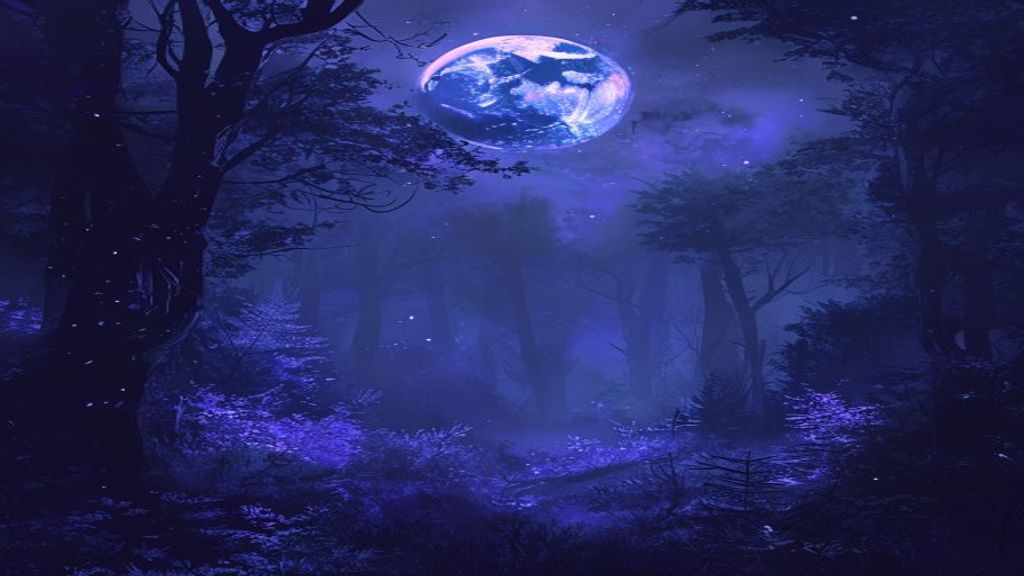
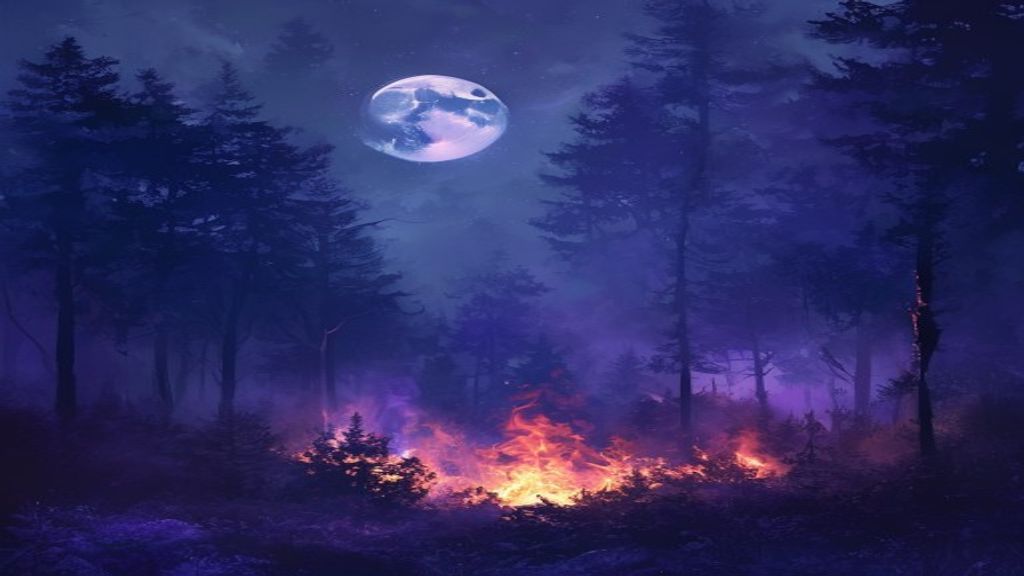
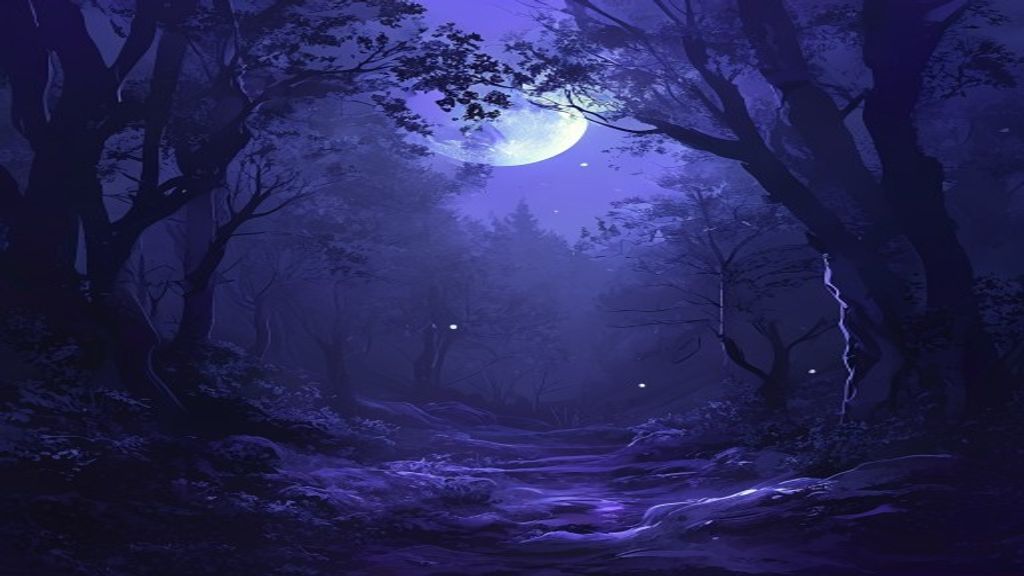
That’s the question the dark forest asks. Not out loud. Never out loud. You’re walking, the canopy closes overhead, the light gets thin and green and unreliable, and somewhere in your chest is this specific pull, not fear exactly, more like the feeling of knowing a word is on the tip of your tongue. You keep walking. The trees don’t part. You wake up before anything happens.
A dark forest in a dream usually represents something in you that hasn’t been looked at yet: an emotion, a situation, an aspect of yourself you’ve been skirting. The darkness isn’t threatening. It’s unresolved. The direction you walk in, toward or away, matters as much as the forest itself.
The torch you left at home
Here’s the detail worth asking about: did you have a light? A phone, a torch, a lamp you were carrying? Because almost nobody does in these dreams, and that absence is the whole story. You walked in without one. You could have gone back. You didn’t.
Anyone who has slid a closet door half-open as a child and stared into the dark at the back knows the game. Not to get anything. Just to see how long you can hold the not-knowing before you reach for the light cord. It’s a small rehearsal of something larger, and the dark forest is the same threshold. You’re not trying to survive it. You’re testing your own willingness to stay in the unknown.
Jungian readings take the forest, across folktales and dreams alike, to stand for the unconscious, the part of psyche that doesn’t answer questions directly, that speaks only in images and weather. I’m usually a bit wary of reading everything as unconscious symbolism, but the closet-door game makes the idea hard to argue with.
Two kinds of darkness
You’re being chased into it
The forest here is refuge, not threat. Something in waking life is pressuring you, and the trees offer cover. The darkness is shelter, however unnerving it feels. The question isn’t what’s in the forest. It’s what you’re running from.
You’re choosing to enter
This is the more demanding version. Nothing is behind you. The pull is forward. That’s your own curiosity about something you’ve been deliberately not examining: a relationship dynamic, a professional drift, a truth you’ve been standing in front of for months without quite opening the door.
What the path does
Whether there’s a path or not is one of the most reliable signals in this kind of dream. A path says: someone has been here before. A structure exists, even if you can’t see the end of it. Pathless forest says something different. You’re in unmapped territory, which in dream terms often means you’re dealing with something you have no framework for yet.
The trees themselves are dense with cultural memory. Greek sanctuaries were often set in sacred groves, and the Brothers Grimm sent their characters into the forest to be changed, not destroyed. Even when the forest is frightening in those stories, coming out the other side is usually the point.
G. William Domhoff’s work on dream continuity would say none of this is surprising. If you’re carrying something unexamined in your waking life, your dreaming mind will build a landscape for it. Dark forests appear when you’re somewhere between knowing and not-knowing, when you haven’t yet decided whether to look.
Animals, clearings, and the thing you almost saw
Some dark forest dreams have an animal in them. Or a light through the trees that you can almost reach. Or a house you can see from a distance that disappears before you get there. These details shift the reading considerably.
An animal that watches you but doesn’t attack is the dream’s way of showing you something about yourself you haven’t owned yet. A distant clearing you can’t reach is longing, sometimes creative, sometimes relational. The house in the trees, lit from inside: that is the most quietly hopeful image in the whole family. A house is a self. A lit house is a self that’s inhabited, whole. You’re outside it, looking in. That’s not a verdict on you. It’s a direction.
Dreaming of thunder shares the forest’s awe and the slightly vertiginous feeling of being small inside something large. And if your forest felt less dark than alive, dreaming of a flower looks at the growing side of the woods, where something is coming into bloom.
Recurring visits
If it keeps coming back, the same forest, the same insufficient light, the same pull forward that never resolves: that’s not a malfunction. That’s a question your waking life hasn’t answered yet.
The forest recurs until you either step toward whatever it’s standing in front of, or you decide consciously that you’re not going to, which is also a choice the dream will eventually accept. Dreams are patient. They’ll hold the question open for years. Years, sometimes.
The closet game usually ends the same way: nothing scary at the back, just coats and shoe boxes and a tin of buttons, and a faint embarrassment that gives way to the realization that the nothing was the whole point. The threshold was the lesson, not the contents. Some forests don’t resolve into clearings. Some of them are just the kind of place you learn to move through.
- Did you have a light with you, and did you choose not to use it, or simply not have one?
- Were you running toward the forest or pulled in from curiosity? The direction matters enormously.
- Was there a path? What does having no map feel like in your waking life right now?
- If there was an animal or a distant light, what were you willing to do to reach it?
One symbol, two traditions
Psychology keeps dark forest inside your own story, a symbol your mind built from your days. The biblical tradition looks outward instead, and asks whether Scripture gives the image any voice at all.
A dark forest in a dream usually represents something in you that hasn’t been looked at yet: an emotion, a situation, an aspect of yourself you’ve been skirting. The darkness isn’t threatening. It’s unresolved. The direction you…
You are reading this oneA dark forest doesn’t appear in Scripture by name, but the biblical wilderness tradition is its closest cousin. Darkness, lostness, and disorientation in Scripture are almost always transitional: places you walk through toward…
Read the biblical meaning →Quick answers
What does a dark forest mean in a dream?
It usually represents something unexamined in your own psychology: an emotion, a situation, or a part of yourself you’ve been skirting. The darkness isn’t danger. It’s the feeling of standing at the edge of something you haven’t fully looked at yet.
Is dreaming of a dark forest a bad sign?
Not really. The forest can feel ominous, but it’s more often an invitation than a threat. Most people who have these dreams are being asked to look at something, not to survive something. The discomfort is the point of entry.
What does it mean if there’s no path in the forest?
Pathless forest tends to signal that you’re navigating something you have no existing framework for. You haven’t been here before, or this particular version of the problem is new. That’s disorienting, but it’s also honest.
Why do I keep dreaming of the same dark forest?
Recurring forest dreams usually mean whatever the forest represents in your waking life hasn’t been addressed. The dream will keep building that particular landscape until you’ve acknowledged, explored, or consciously set aside what it’s pointing toward.
Sources for this reading
- Domhoff, G. W. (2003). The Scientific Study of Dreams: Neural Networks, Cognitive Development, and Content Analysis. American Psychological Association.
- Domhoff, G. W. (1996). Finding Meaning in Dreams: A Quantitative Approach. Plenum Press.
Full bibliography on Sources and method. Found a mistake? Tell us and see the corrections log.