- Tradition
- Biblical reading
- Also read as
- PsychologySame symbol, other tradition
- Scripture
- Mark, Genesis, Psalms, Jonah
- Reviewed
- 4 min read
“Peace, be still.” Those three words in Mark 4:39 are probably the most startling three-word sentence in the New Testament, and what makes them startling isn’t the miracle. It’s the tone. Not a prayer, not a command directed upward. A command directed at the water. And the water obeys.
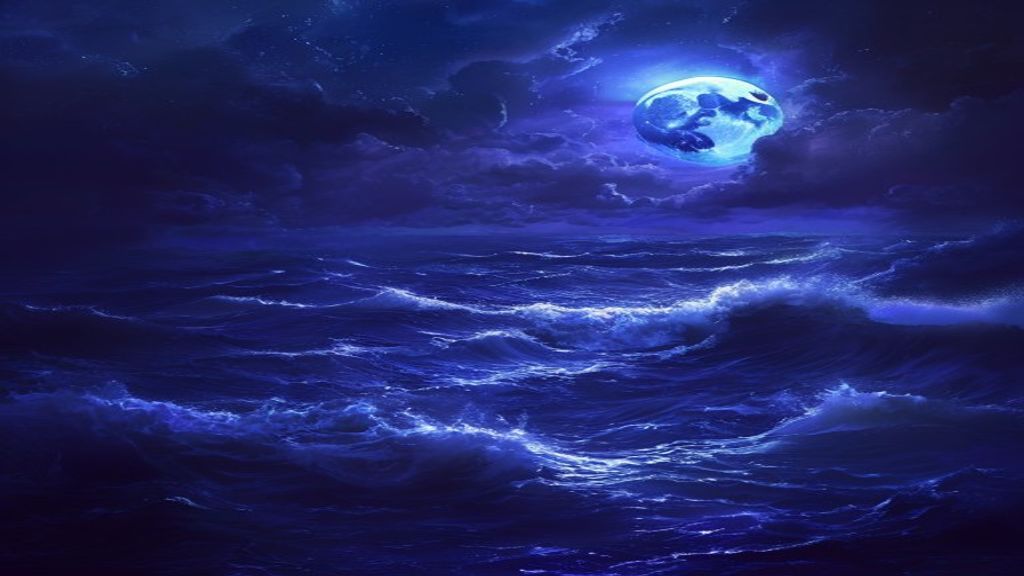
The raging sea in Scripture is the image of chaos, threat, and forces beyond human control. But Scripture’s consistent claim is that the sea is not beyond God’s control. A dream of a raging sea might be less about the danger itself and more about where you’re standing in relation to the one who commands it.
What the Bible actually says about the raging sea
The sea in ancient Near Eastern cosmology, which the Bible was written into and speaks across, was the ultimate symbol of chaos. Tehom, the deep in Genesis 1:2, is the formless sea over which the Spirit hovers at creation. Taming the sea is creation itself. The Psalms pick this up: Psalm 93:3-4 describes the seas lifting their voice, the floods lifting their waves, and then, ‘The LORD on high is mightier than the noise of many waters, yea, than the mighty waves of the sea.’
The sea as chaos
Genesis 1:2 starts with the deep (tehom), formless and dark. Jonah 1 shows the sea throwing off what is wrong: the storm rises against Jonah’s flight from God and doesn’t stop until he’s overboard. Isaiah 57:20 describes the wicked as like the troubled sea that cannot rest. The raging sea carries moral and spiritual disorder, not just weather.
The sea as sovereign ground
Mark 4:39: Jesus rebukes the wind and says ‘Peace, be still’ and the sea becomes calm. Psalm 107:29: ‘He maketh the storm a calm, so that the waves thereof are still.’ Exodus 14: the Red Sea is split and becomes dry ground. Revelation 21:1 says in the new creation there is no more sea. The tradition moves consistently from raging sea to commanded calm.
Jonah’s storm is worth sitting with specifically. The sea in Jonah 1 isn’t random chaos: it’s responsive. The sailors try everything to calm it and nothing works until Jonah identifies himself as the source of the problem. The sea’s rage is diagnostic before it’s destructive. It’s pointing at something.
Reading your dream through the sea’s direction
Most people who dream of a raging sea are either in a boat or watching from shore, and that positioning tells you something. In Mark 4, the disciples are in the boat and Jesus is with them, asleep. The storm is real, their fear is real, and the question Jesus asks afterward is striking: ‘Why are ye so fearful? how is it that ye have no faith?’ He doesn’t deny that the storm happened. He asks where their trust was located while it was happening.
A dream of a raging sea might be asking that same question in your waking life. Not ‘is there really a storm?’ but ‘where is your weight resting while the storm runs?’ That’s not a prophecy about your situation. It’s an invitation to examine your relationship to what you can’t control.
For the secular layer of the raging sea as a dream image, the dreaming of a raging sea article covers the emotional and psychological dimensions in depth. If you were in a boat, as the disciples were in Mark 4, the biblical meaning of a boat in dreams reads the vessel and the storm together. And if the water went still before you woke, the biblical meaning of a calm sea in dreams picks up the stillness that follows the command.
Where Scripture’s silence invites honesty
No sleeping dream in the Bible is explicitly set on a raging sea. The Jonah narrative includes sleep (Jonah sleeps below decks during the storm), but the storm is waking reality. The tradition of God commanding the sea comes from waking visions, psalms, and narrative, not from someone’s sleeping dream. Applying those texts to your dream is legitimate interpretation, but it’s worth saying that honestly: this is application of the tradition, not a direct verse about your night.
- In the dream, where were you in relation to the sea: in the water, in a boat, on shore? What does that positioning feel like?
- What in your waking life is currently raging beyond your ability to calm it?
- Is there something in the storm that’s diagnostic, the way Jonah’s storm was: pointing at something that needs to surface?
- Where is your weight resting right now? What or who are you trusting to hold you through the thing you can’t control?
One symbol, two traditions
Psychology keeps raging sea inside your own story, a symbol your mind built from your days. The biblical tradition looks outward instead, and asks whether Scripture gives the image any voice at all.
A raging sea usually stands for an emotional or external force that feels bigger than you right now. It’s not a warning about disaster. It’s your mind holding up a mirror to what overwhelming actually feels like, so you can look…
Read the psychological meaning →The raging sea in Scripture is the image of chaos, threat, and forces beyond human control. But Scripture’s consistent claim is that the sea is not beyond God’s control. A dream of a raging sea might be less about the danger…
You are reading this oneQuick answers
Is a raging sea dream a warning from God?
Joel 2:28 affirms that God speaks through dreams, and the biblical sea tradition is rich enough that a vivid dream about it is worth taking seriously. But Ecclesiastes 5:7 cautions against treating every dramatic dream as prophetic, and Jeremiah 23:25-28 warns about false confidence in dreams. The honest approach is to ask what the dream illuminates about your current season, bring that to prayer and wise counsel, and hold it lightly rather than as a decree.
Does a raging sea mean my life is out of control?
The biblical tradition takes that possibility seriously without being alarmist. The sea in Scripture signals what is beyond human ordering. But the tradition’s consistent move is to place that chaos under divine sovereignty. A raging sea dream might be honestly naming something uncontrollable in your life while simultaneously pointing toward the one who commands the water.
What does it mean if I was drowning in the raging sea?
Drowning imagery connects to the psalms of distress, especially Psalm 69:1-2 where David says ‘the waters are come in unto my soul’ and ‘I sink in deep mire.’ These are among the most honest prayers in Scripture about being overwhelmed. The tradition of lament takes the feeling seriously rather than spiritualizing it away. Psalms like this are worth reading slowly when a dream has left you with that sense of being taken under.
Could the raging sea in a dream represent spiritual warfare?
The biblical tradition connects the chaotic sea to forces of disorder that are real but bounded. Revelation 21:1’s vision of no more sea is read by many as the end of those forces. Within the tradition, readings vary. Before reaching for spiritual warfare as a frame, it’s worth asking the more grounded question: what in your life is genuinely beyond your capacity to manage, and what would it mean to trust rather than control it?
Sources for this reading
- The Holy Bible, King James Version (1611). Public domain. Scripture quotations on this site are from the KJV.
Full bibliography on Sources and method. Found a mistake? Tell us and see the corrections log.