- Tradition
- Biblical reading
- Also read as
- PsychologySame symbol, other tradition
- Scripture
- Revelation, John, James, Psalms
- Reviewed
- 5 min read
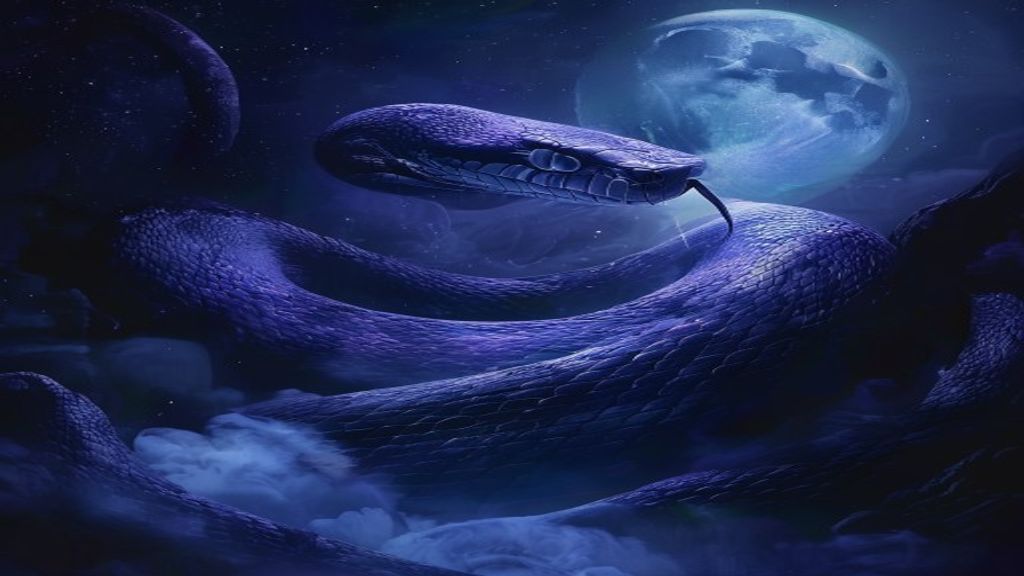
Scale changes everything. A sparrow on a wire is charming. A condor directly overhead is something else. The question isn’t just ‘what animal’ but ‘how much of the sky is it filling.’ When a snake in a dream is enormous, the dreamer usually wakes knowing the size wasn’t incidental. That sense of overwhelm, of something vast and not quite containable, is the first thing worth taking seriously before reaching for a symbol chart.
The biblical serpent tradition is rich and layered, and the secular reading of a giant snake dream covers the psychological side of the same image. For the biblical angle, the honest starting point is this: Scripture records no dream featuring a snake of any size. But it does offer some of the most striking serpent imagery in any ancient text, and the scale question turns out to have its own biblical resonance.
What the Bible actually says about giant serpents
The largest serpent in the canon isn’t a creature at all in the usual sense. Revelation 12:9 identifies ‘that old serpent, called the Devil, and Satan, which deceiveth the whole world.’ The language of that verse is about scope: the creature that deceives the whole world is as large as the world it deceives. Earlier in the same vision, the great dragon’s tail ‘drew the third part of the stars of heaven.’ Whatever the Revelation imagery ultimately signifies, it’s explicitly cosmic-scale. The serpent in Revelation isn’t garden-sized. It fills the sky.
That image sits in direct tension with Numbers 21:8-9, where God instructs Moses to make a bronze serpent and set it on a pole so that anyone bitten can look at it and live. Jesus explicitly references this passage in John 3:14: ‘And as Moses lifted up the serpent in the wilderness, even so must the Son of man be lifted up.’ The serpent raised for healing is not small or insignificant; it’s elevated, visible, authoritative. Size in these passages tracks with power, both destructive and redemptive.
What the scale tells you that the symbol alone doesn’t
Most biblical-dream sites will give you ‘snake equals enemy or deception’ and leave it there. What they miss is that size in Scripture doesn’t just intensify an existing meaning; it changes the category. The serpent of Genesis 3 is a garden creature, subtle but not cosmic. The serpent of Revelation is explicitly described as deceiving ‘the whole world.’ The shift from small to vast is a shift from personal temptation to systemic deception. If your dream featured a snake that felt world-sized, the biblical question isn’t just ‘what personal temptation am I facing?’ but ‘what larger force have I been living inside without recognizing it?’
That’s a harder question. Job 33:14-16 describes God speaking in dreams when people ‘perceiveth it not’ during waking hours. If there’s something in your life at a scale you’ve been unable to see clearly because you’re inside it, a giant snake dream might be doing the work of perspective. I’m not claiming it’s a message. I’m saying the question is worth sitting with.
For related readings, the biblical meaning of dragons in dreams follows the Revelation 12 figure on its own, and the biblical meaning of snakes in dreams covers the ordinary-sized serpent, where Genesis 3 does most of the work. Within the tradition, how interpreters have weighted the serpent passages varies considerably. Some lean heavily on the Revelation identification and read any serpent dream as spiritual warfare. Others, more cautious, hold to Ecclesiastes 5:7 and treat the dream as personal emotional processing that may or may not carry divine speech.
The John 3:14 passage is arguably the most theologically audacious thing Scripture does with the serpent image. It takes the symbol of the fall and the wilderness judgment and says: this is the shape redemption takes. It goes up. If the giant snake in your dream left you not just frightened but oddly transfixed, that might be the shadow the image is casting.
- How big was the snake in your dream, and did the size feel like a threat, a fact of nature, or something else? Try to describe the quality of the feeling before the label.
- Is there something in your life right now that feels too large to fully see, something systemic or long-running rather than a single event?
- The Numbers 21 serpent had to be looked at directly to bring healing. Is there something in your current situation that you’ve been avoiding looking at straight on?
- If you brought this dream to prayer and asked God what it was pointing at, what would you most fear the answer to be?
One symbol, two traditions
Psychology keeps giant snake inside your own story, a symbol your mind built from your days. The biblical tradition looks outward instead, and asks whether Scripture gives the image any voice at all.
A giant snake in a dream usually signals something in your life that has grown too large to avoid. The scale is the message. The snake itself, whether threatening or calm, reflects how you feel about that enormous thing, not the…
Read the psychological meaning →Scripture uses giant or cosmic-scale serpent imagery most explicitly in Revelation 12:9, where the ‘great dragon, that old serpent, called the Devil’ is described as deceiving the whole world. Numbers 21 and John 3:14 give the…
You are reading this oneQuick answers
What does a giant snake mean in the Bible?
Scripture uses giant or cosmic-scale serpent imagery most explicitly in Revelation 12:9, where the ‘great dragon, that old serpent, called the Devil’ is described as deceiving the whole world. Numbers 21 and John 3:14 give the serpent an alternate reading as a symbol of healing and redemption when lifted up. Size in these passages amplifies meaning rather than simply intensifying fear.
Is a giant snake dream a message from God?
Joel 2:28 affirms that God can speak through dreams. Job 33:14-16 says God instructs in visions of the night. At the same time, Ecclesiastes 5:7 warns against treating every dream as prophecy, and Jeremiah 23:25-28 cautions against mistaking our own mental activity for divine speech. A dream as vivid and large as a giant snake is worth prayerful attention, ideally with a trusted spiritual guide who knows your actual situation.
Does a giant snake represent the devil in dreams?
The Revelation 12:9 passage is often cited for this, and it’s a legitimate biblical connection. But the biblical serpent tradition is wider than that single identification. The bronze serpent in Numbers, the wisdom serpent of Matthew 10:16, and the Genesis 3 serpent as a creature of subtle deception all complicate any single fixed meaning. Discernment involves asking which of these registers fits your waking life.
What does it mean if I wasn’t afraid of the giant snake?
Absence of fear before something powerful is itself a biblical category. In several encounters with divine or angelic figures in Scripture, the immediate response is fear and the immediate reply is ‘fear not.’ If you felt awe rather than terror, or something closer to recognition, that quality of response is worth including when you journal or pray through the dream. It changes the question from ‘what threatens me?’ to ‘what have I been in the presence of without knowing it?’
Sources for this reading
- The Holy Bible, King James Version (1611). Public domain. Scripture quotations on this site are from the KJV.
Full bibliography on Sources and method. Found a mistake? Tell us and see the corrections log.