- Tradition
- Psychological readingFood dreams
- Draws on
- Domhoff, Hobson, Artemidorus
- Reviewed
- 5 min read
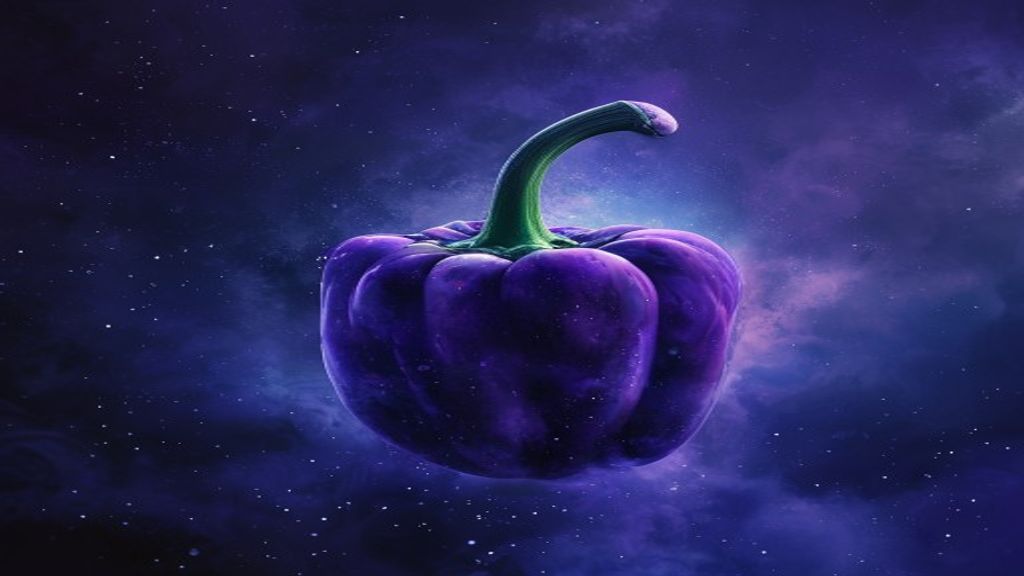
A bell pepper in a dream is usually dismissed as leftover from dinner, a bit of the day’s debris. Hobson’s activation-synthesis model would mostly agree. Domhoff’s continuity hypothesis, the idea that dreams extend waking concerns, adds a twist: an ordinary image can still be the one a concern chooses. A red pepper on a white cutting board, lacquered and almost smug, is vivid enough to insist on being noticed, like it had something to say and wasn’t going to say it first.
A bell pepper in a dream usually points to something in your life that is vivid, ripe, and not yet used. The color matters: red leans toward passion or urgency, green toward potential that hasn’t finished developing, yellow toward something steady and undervalued. The feeling as you hold or see it does most of the interpretive work.
Why the color is the whole story
Most dream symbols work through associations so old they’re almost geological. But bell peppers are a late arrival to the dream repertoire, historically speaking, which means the dreaming mind uses them pretty literally: they are about what they look like. And what they look like depends entirely on when you picked them. Green means not yet. Red means fully arrived, possibly overdue. Yellow and orange sit in between, that gentle sweetness of something that ripened without drama.
Dreams about food that’s clearly ripe and untouched often carry a mild frustration underneath. Not alarm, exactly. More like the low-grade tension of a beautiful day you didn’t go outside for. If you’re dreaming of lacking food in general, the pepper variant usually points to a specific lack: abundance you can see but aren’t accessing. It’s close enough to touch and you’re standing one step away.
Urgency or passion. Something in your life is fully ripe and waiting. You may already know what it is. The dream is asking why you haven’t reached for it yet.
Potential still developing. Don’t force it. The thing you want isn’t ready, or you aren’t. Both readings are equally valid and equally hard to sit with.
Steady, quiet value. Something good in your life that gets treated as background. The dream might be asking you to taste what you already have.
Opportunity that passed its window. Less accusatory than it sounds. Recognizing what’s gone is different from grieving it, and sometimes that’s all the dream wants.
You’re actively working with what you have. The act of cutting transforms, so check what the pepper becomes. A raw ingredient becoming part of something larger is a hopeful sign.
Direct contact with something vivid and perhaps sharp. You’re taking in experience unfiltered. It might be a little much, and that’s fine.
The image worth coming back to
Say a creative project is fully finished, genuinely ready, sitting in a folder. Months pass. You keep telling yourself the timing isn’t right. Then the pepper turns up on the cutting board, and it doesn’t need analysis. You know exactly what it means the moment you write it down. The more honest question is why you needed a dream to say it out loud.
G. William Domhoff’s continuity hypothesis would predict exactly this: the dream simply mirrors the waking preoccupation. There’s nothing hidden, no code to crack. The thing you’re avoiding is right there on the white cutting board, bright as a red pepper, and the mind replays it at night because you didn’t deal with it during the day. Domhoff would find my poetic reading overly generous, and he’d probably be right. Still, I think the image earning its own dream is worth taking seriously, even if the mechanism is mundane.
What Artemidorus can still offer here
Artemidorus wrote his Oneirocritica in the second century, long before the bell pepper reached Europe, so he never had to interpret one. What he left is a method: the same dream means different things for different dreamers, depending on age, status, and occupation. Applied to a pepper, a brilliant red one would be less a verdict than a question about who is dreaming: a cook, a grower, someone who has been waiting for permission to start.
I find that method more useful than it sounds. A bell pepper in a dream tends to get noticed. It’s not hiding. If dreaming of a cucumber tends to be cool and understated, the pepper is its opposite: it insists on being seen. That insistence is worth noting, regardless of which century’s framework you’re using.
What the skeptic would say
Hobson’s activation-synthesis model doesn’t leave much room for meaningful bell peppers. The brain fires, pulls recent material, constructs a narrative from noise. If you cooked with peppers recently, or passed a market stall, that’s your symbol. Done. I hold this view alongside the more interpretive ones because it’s a useful check on over-reading. Sometimes a pepper is just a pepper. The question is whether the feeling around it suggests otherwise.
Dreams like this tend to fade once the thing they point at gets done. The pepper goes wherever images go when you stop needing them. I don’t think the dream predicts how the finished work will land. I do think it notices the stalling, the way a friend who’s watching from outside can see things you’re inside of. Dreaming of a fig is the closest cousin, since ripeness and missed timing come up there again in a slightly darker key.
- What color was the pepper, and does that color match something in your waking life right now?
- Was the pepper ripe, unripe, or past its moment? Which of those fits the season you’re in?
- Were you using it, holding it, or just looking at it? The action tells you where you actually are with the thing it represents.
- Is there something vivid and ready in your life that’s been sitting on the cutting board too long?
Quick answers
What does it mean to dream of a red bell pepper?
Red tends to signal something fully ripe, urgent, or passion-adjacent. If the red pepper was bright and untouched, the dream is probably pointing to something in your life that’s ready to be used or acted on. The frustration, if any, is usually about why you haven’t moved yet.
Is dreaming of a bell pepper a positive sign?
Generally, yes. A healthy, vivid pepper tends to stand for potential, vitality, or something good within reach. The reading shades toward concern only if the pepper is rotting or the feeling in the dream is anxious rather than curious.
What does it mean to cut a bell pepper in a dream?
Cutting usually means you’re actively working with whatever the pepper represents. Transformation is in progress. Pay attention to what happens next in the dream: what the pepper becomes, or what dish it’s headed toward, often carries as much meaning as the cutting itself.
Why do colors matter so much in food dreams?
Food dreams are highly sensory, and color is one of the fastest signals the sleeping mind uses. Ripe colors tend to point toward readiness or abundance. Dull or off colors suggest something’s missed its window. Your gut reaction to the color in the dream is usually more accurate than any external interpretation.
Sources for this reading
- Domhoff, G. W. (2003). The Scientific Study of Dreams: Neural Networks, Cognitive Development, and Content Analysis. American Psychological Association.
- Domhoff, G. W. (1996). Finding Meaning in Dreams: A Quantitative Approach. Plenum Press.
- Hobson, J. A., & McCarley, R. W. (1977). The brain as a dream state generator: An activation-synthesis hypothesis of the dream process. American Journal of Psychiatry, 134(12), 1335-1348.DOI
- Artemidorus of Daldis (2nd century CE). Oneirocritica. English edition: Harris-McCoy, D. E. (2012). Artemidorus’ Oneirocritica: Text, Translation, and Commentary. Oxford University Press.
Full bibliography on Sources and method. Found a mistake? Tell us and see the corrections log.